

Schools in Sosúa & Cabarete: A 2026 Guide for Expat Families
Looking for schools in Sosúa or Cabarete? Compare international, bilingual and local schools, curricula, languages, tuition and locations in 2026.
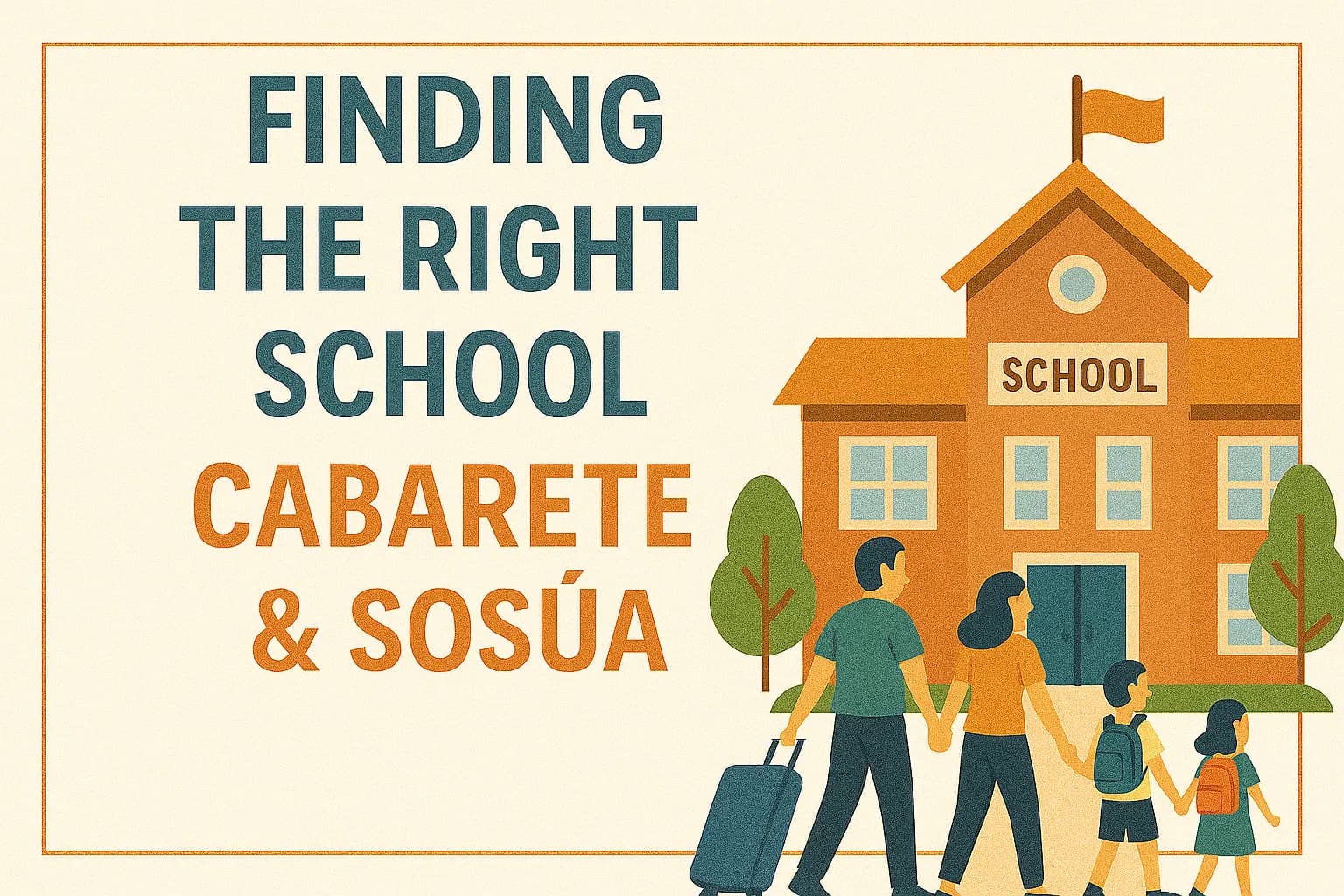
Moving to Sosúa or Cabarete with children? Discover the best international, bilingual and local schools on the Dominican Republic’s North Coast and what families should know before choosing a school.
One of the biggest questions families ask before moving to the Dominican Republic is simple:
“Where will my children go to school?”
For families considering Sosúa, Cabarete or the surrounding North Coast, the answer is more encouraging than many people expect.
The area has a selection of international, bilingual and Spanish-language schools serving children from preschool through high school. Some programs are primarily taught in English, while others place a stronger emphasis on Spanish, bilingual education or alternative learning approaches.
This makes the Sosúa and Cabarete area particularly interesting for international families — but choosing the right school requires looking beyond a school's name.
You need to consider language, curriculum, age, location, tuition, transportation and your child's long-term educational plans.
This guide covers the main school options families should know about in 2026.
🏫 International Schools in Sosúa & Cabarete
For many families moving from the United States, Canada or Europe, international schools are the easiest transition.
They can provide English-language instruction, internationally oriented curricula and a student population made up of families from different countries.
Two of the best-known options in the Sosúa-Cabarete area are The International School of Sosúa (ISS) and ISLA Academy.
🎓1. International School of Sosúa (ISS)
The International School of Sosúa (ISS) is one of the area's longest-established international schools.
Located in La Mulata, Sosúa, ISS currently serves students from early childhood through Grade 12. The school describes its program as English-based while also incorporating Dominican curriculum requirements, including Spanish and Dominican Social Studies.
ISS is currently accredited through Cognia and recognized by the Dominican Ministry of Education. The school says its graduates can earn both a U.S. High School Diploma and the Dominican Republic diploma, creating pathways to universities in the United States, Canada, Europe and elsewhere.
Why international families consider ISS
- English-based academic program
- Early childhood through Grade 12
- U.S. educational standards
- Dominican curriculum components
- International student community
- Sports and extracurricular activities
- Large tropical campus
- College-preparatory education
The school currently reports families representing more than 25 nationalities, which reflects the international character of the Sosúa area.
Best suited for: Families looking for a traditional international school with an English-based academic program and a clear pathway through high school.
🌎 2. ISLA Academy – Cabarete
ISLA Academy is another major option for international families living around Cabarete and Sosúa.
The Cabarete campus is located in Playa Laguna, along the main coastal road toward Puerto Plata. ISLA currently offers education from Pre-K through Grade 12, with a curriculum taught primarily in English.
One of ISLA's biggest differences is its educational philosophy.
Rather than relying primarily on traditional classroom instruction, the school uses an inquiry-based approach, encouraging students to investigate questions, develop ideas and actively participate in their education.
Why families consider ISLA Academy
- Pre-K through Grade 12
- Primarily English-language instruction
- Inquiry-based learning
- Internationally certified teachers
- Personalized approach
- Outdoor learning
- Sports and extracurricular activities
- International student community
ISLA's current 2026–27 tuition schedule ranges from $6,600 to $8,600 per year, depending on the grade/phase, before considering registration and other applicable costs. Families should confirm the current fee schedule directly with the school before making a decision.
Best suited for: Families who prefer a modern, inquiry-based educational environment and want their children educated primarily in English.
🌱 3. Garden Kids International School
For families with younger children, Garden Kids International School is another option in the Sosúa/Cabarete area.
The school focuses on early education and provides a bilingual environment for younger students.
For parents moving to the North Coast with preschool- or elementary-age children, schools like Garden Kids can be worth visiting alongside the larger international schools.
Important: Availability, age groups, curriculum and tuition can change, so contact the school directly before making your relocation plans.
🇩🇴 4. Spanish-Language & Bilingual Schools
Not every family wants an entirely English-speaking education.
Some parents deliberately choose bilingual or Spanish-language schools because they want their children to become fluent in Spanish and integrate more deeply into Dominican society.
Options in and around Sosúa and Cabarete include local and bilingual schools such as Colegio Luis Hess, Colegio Children's World, Colegio El Coral and other local educational programs.
The right choice depends heavily on your child's age, current Spanish level and whether you plan to remain in the Dominican Republic long term.
For younger children especially, entering a Spanish-speaking environment can be a powerful way to develop natural language skills.
🇺🇸 English, Spanish or Bilingual: Which Is Better?
This is one of the most important decisions for an expat family.
English-language education
Usually makes the transition easier for children coming from the United States, Canada or other English-speaking countries.
Advantages:
- Easier academic transition
- Familiar language
- International curriculum
- Easier continuation toward English-speaking universities
Spanish-language education
Can provide much deeper cultural and linguistic integration.
Advantages:
- Faster Spanish development
- Greater integration with Dominican society
- Children become more comfortable communicating locally
Bilingual education
For many families, this is the ideal compromise.
Children can maintain English while developing Spanish — a particularly valuable combination if they will grow up between two cultures.
📚 What Curriculum Should You Look For?
The curriculum matters particularly if your children may eventually attend university outside the Dominican Republic.
Before enrolling, ask:
- Which curriculum does the school follow?
- What diploma does the student receive?
- Is the school accredited?
- What languages are used in each grade?
- How are university applications handled?
- Can students transfer easily from another country?
- What standardized testing is available?
- What support exists for students who are new to Spanish or English?
For example, ISS currently combines an English-based academic program aligned with U.S. standards with Dominican curriculum requirements.
ISLA Academy, meanwhile, describes its curriculum as rigorous, personalized and primarily English-language, with inquiry-based learning from Pre-K through Grade 12.
💰 How Much Does School Cost in Sosúa & Cabarete?
There is no single price for schooling on the North Coast.
Costs vary significantly depending on:
- School
- Grade
- Curriculum
- Registration fees
- Tuition
- Activities
- Transportation
- Meals
- Uniforms
- School supplies
International schools generally cost considerably more than local schools.
As one current example, ISLA Academy's published 2026–27 Cabarete tuition ranges from $6,600 for preschool/early grades to $8,600 for Grades 9–12, with separate registration fees depending on the payment option.
Always request the latest tuition schedule directly from the school.
🚗 Location Matters More Than You Think
When choosing where to live, don't look at the school in isolation.
Think about your entire daily routine.
A family living in Sosúa may want convenient access to schools, supermarkets, beaches, restaurants and healthcare.
A family living in Cabarete may prioritize proximity to ISLA Academy, the beach, sports and outdoor activities.
This is one reason the areas between Sosúa and Cabarete can be particularly interesting for families.
You can live in a residential community while remaining within practical driving distance of schools, beaches and everyday services.
If you're considering where to live, our guide to the best communities in Sosúa and Cabarete is a useful next step.
🏡 Where Do Families Live Near the Schools?
There is no single “best” neighborhood for every family.
Some families prefer being close to Sosúa's restaurants, beaches and services.
Others prefer the quieter residential environment around Cabarete.
Popular residential areas and communities include:
- Sosúa
- El Batey
- La Mulata
- Casa Linda
- Cabarete
- Playa Laguna
- Perla Marina
- Sea Horse Ranch
- Surrounding residential communities
For families, the most important factors are usually school commute, security, outdoor space, bedrooms, access to services and proximity to the beach.
If you're looking for a family home, you can also explore our Sosúa real estate guide.
🌴 Why Families Choose Sosúa & Cabarete
Schooling is only one part of the equation.
Families also choose the North Coast because everyday life can combine:
Beach + school + outdoor activities + international community + tropical lifestyle.
Children can spend less time indoors and more time swimming, surfing, playing sports and exploring the outdoors.
Cabarete in particular offers an active lifestyle built around the ocean, while Sosúa provides easy access to beaches, restaurants, shops and services.
The result is very different from simply taking a two-week Caribbean vacation.
You're building a lifestyle.
👨👩👧 What About Children Who Don't Speak Spanish?
This is a common concern for parents moving from abroad.
The good news is that children often adapt to new languages faster than adults.
However, the transition depends heavily on age and the child's existing language skills.
For a child who does not speak Spanish, an English-language international school may provide a smoother academic transition.
For a younger child, a bilingual or Spanish-heavy environment may be an opportunity to develop Spanish naturally.
There is no universal answer.
The best choice depends on your child's personality, age and long-term plans.
🔎 Questions to Ask Before Choosing a School
Before signing a lease or buying a house, visit the schools you are considering.
Ask:
Academic
- What curriculum is taught?
- What languages are used?
- What grades are available?
- What diploma will my child receive?
Practical
- What are the tuition and registration fees?
- Is transportation available?
- What are the school hours?
- Are meals included?
- What extracurricular activities are available?
Admissions
- Are places currently available?
- Is testing required?
- What documents are needed?
- Can children enter during the school year?
ISS, for example, states that it accepts applications throughout the school year subject to testing and space availability.
Long-term
- Where do graduates attend university?
- Is the curriculum transferable?
- What happens if we return to the U.S., Canada or Europe?
- Can the school support children entering from another education system?
🗺️ Should You Rent or Buy Near a School?
If you're moving to the Dominican Republic for the first time, renting for several months can be a smart way to learn the area.
You can test:
- The school commute
- Your child's adjustment
- The neighborhood
- Traffic
- Local services
- Your preferred lifestyle
Once you know where your family wants to be, buying can make more sense.
If you already know that Sosúa or Cabarete is where you want to settle, however, it is worth exploring the property market before signing a long-term rental.
Our guide to buying property in the Dominican Republic explains the purchasing process, legal due diligence, taxes and other important considerations.
Frequently Asked Questions
Are there international schools in Sosúa?
Yes. Sosúa has international educational options, including the International School of Sosúa, which currently serves students from early childhood through Grade 12.
Are there international schools in Cabarete?
Yes. ISLA Academy operates a Cabarete campus in Playa Laguna and currently offers Pre-K through Grade 12 with instruction primarily in English.
Are schools in Sosúa taught in English?
Some international schools use English as their primary language of instruction, while other schools are bilingual or primarily Spanish-speaking. Parents should confirm the language of instruction for their child's specific grade.
How much does an international school cost in Sosúa or Cabarete?
Tuition varies significantly by school and grade. For example, ISLA Academy's published 2026–27 tuition is $6,600–$8,600 annually depending on the grade/phase, before applicable registration or other fees.
Can children attend school if they don't speak Spanish?
Yes. International and bilingual schools can be particularly suitable for children arriving from English-speaking education systems. The appropriate option depends on the child's age and language skills.
Is Sosúa a good place for families?
For many international families, yes. The area offers beaches, residential communities, restaurants, services, outdoor activities and international schooling within a relatively compact area.
🌴 Moving to Sosúa or Cabarete With Your Family?
Choosing the right school is only one part of relocating to the Dominican Republic.
The next question is:
Where should you live?
For families, the ideal home is usually not simply the most beautiful property. Location matters.
Being within a reasonable drive of school, having enough bedrooms and outdoor space, living in a secure community and having easy access to beaches and everyday services can make a major difference to your quality of life.
That's why we recommend exploring the schools before choosing your long-term home.
If you're considering a move to the North Coast, explore homes and villas in Sosúa or contact Instyle Investments to discuss your family's requirements.
The right school. The right community. The right home. That's what makes a move to the Dominican Republic work for the whole family.
 Written byAlexander MaurerbauerCEO (Chief Executive Officer)
Keep reading
- Living in Sosúa: area guide and 140 properties
- Living in Cabarete: area guide and 29 properties
- Living in Puerto Plata: area guide and 5 properties
- Living in Sea Horse Ranch: area guide and 10 properties
- Living in Casa Linda: area guide and 7 properties
- Living in Perla Marina: area guide and 3 properties
- Buying property in the Dominican RepublicClosing costs, property tax, CONFOTUR and the buying process
- Padel Tennis in Sosúa, Cabarete & Puerto Plata: Best Clubs, Courts & PricesJournal
- Casa Linda Sosúa: Complete Real Estate & Investment GuideJournal